

Green Bay, Wisconsin • Swimming Pool Tile & Finish Evaluation
Pool Tile Replacement Green Bay, WI
Pool tile replacement in Green Bay should begin with understanding why the existing tile failed. Cracked, hollow, loose or popping waterline tile can involve the tile itself, setting material, substrate condition, waterproofing, movement, freeze/thaw exposure or surrounding pool finishes.
Pool Envy® evaluates the existing condition before establishing a repair scope. Replacement work can then be planned around the actual substrate, tile type, surrounding finishes and installation conditions rather than simply covering an unresolved failure.
Pool Tile Replacement Green Bay: Process & Materials
A durable swimming pool tile repair requires more than replacing the visible pieces. Existing setting material, substrate condition, waterproofing, transitions, movement and the selected installation system all need to work together.
Our Tile & Coping-Band Process
- Protection and drain control: Establish appropriate project conditions and protect adjacent finishes, equipment and work areas.
- Removal: Remove failed tile and unsuitable setting material to expose the underlying assembly.
- Substrate evaluation: Identify weak material, voids, irregular surfaces and conditions that may affect the replacement installation.
- Surface preparation: Repair and re-profile the tile band as required for the selected installation system.
- Waterproofing: Where specified, install a compatible bonded waterproofing membrane and properly detail applicable transitions and penetrations.
- Tile setting: Install submerged-rated tile with the mortar or epoxy system specified for the tile, substrate and application.
- Grout and movement joints: Complete rigid and flexible joints according to the selected system, manufacturer requirements and applicable TCNA guidance.
- Cure and refill: Follow the actual manufacturer requirements for the products and complete installation system before immersion.
Material Specifications
Materials are selected as a compatible system rather than simply choosing individual products that appear suitable by themselves.
| Component | Specification / Standard | Why It Matters |
|---|---|---|
| Waterline tile | Ceramic or porcelain under ANSI A137.1 or glass under ANSI A137.2, with product suitability verified for the swimming-pool application. | Submerged exposure, freeze/thaw conditions, chemistry and tile absorption can all affect product suitability. |
| Waterproofing | ANSI A118.10 bonded waterproofing membrane where required by the selected assembly. | Helps manage moisture and provides continuity at appropriate transitions, penetrations and tile-band details. |
| Setting material | ANSI A118.15 improved modified mortar or ANSI A118.3 epoxy where appropriate and approved for the installation. | Tile type, substrate, environmental conditions and immersion requirements affect the proper setting system. |
| Grout | ANSI A118.7 high-performance cement grout or ANSI A118.3 epoxy, depending upon the specified system. | Chemical exposure, tile type, appearance and manufacturer compatibility affect grout selection. |
| Movement joints | TCNA EJ171 and applicable sealant and manufacturer requirements. | Movement accommodation helps prevent the rigid tile assembly from being forced to absorb movement that should occur elsewhere. |
Pool Tile Replacement in Progress
Field documentation helps verify preparation, materials and installation conditions before the finished work conceals the underlying assembly.
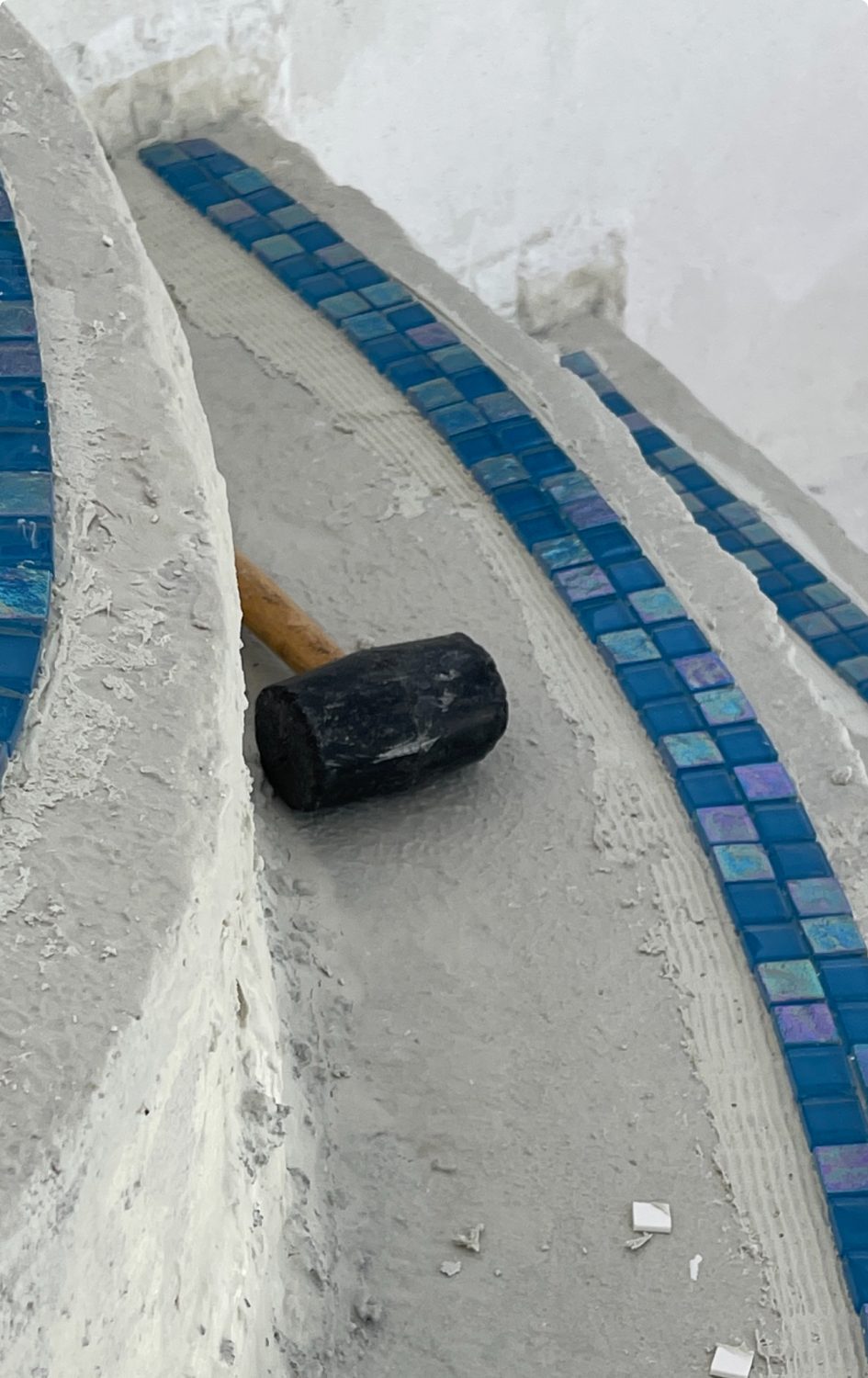

Green Bay Area Pool Tile Case Study — Allouez, WI
This existing gunite pool involved selective restoration of a 1×1 mosaic step-edge band and tile work at the skimmer throat.
Preparation & Installation
- Removed loose tile and unsuitable setting material.
- Prepared the existing substrate for the replacement assembly.
- Installed bonded cementitious waterproofing where specified.
- Established control lines and alignment before committing the mosaic band.
- Verified tile contact during installation rather than relying on the finished face as proof of coverage.
Transitions & Closeout
- Coordinated tile geometry with the surrounding plaster finish.
- Completed selective skimmer-throat tile work.
- Evaluated required movement locations and finish transitions.
- Verified finished alignment and skimmer operation.
- Documented materials and cure/refill requirements.
Choosing Tile for a Submerged Swimming Pool
Not every decorative tile is suitable for permanent swimming-pool exposure. Selection should begin with the manufacturer's intended use and the complete installation system.
Tile & Setting System
Confirm that the selected tile is intended for the swimming-pool application and pair it with a compatible manufacturer-approved setting system.
Substrate & Waterproofing
Existing substrate conditions and applicable waterproofing requirements should be evaluated before the replacement tile conceals them.
Movement
Changes of plane and other movement locations should not automatically be treated as rigid joints.
Grout & Sealant
Tile type, chemistry, exposure, aesthetics and manufacturer-system requirements influence grout and sealant selection.
Why Swimming Pool Waterline Tile Fails
Loose or cracked pool tile is the visible symptom. The actual failure may exist deeper within the assembly.
Substrate Failure
Weak, deteriorated, contaminated or improperly prepared substrate can prevent the replacement tile assembly from developing reliable bond.
Moisture & Freeze/Thaw
Wisconsin conditions can expose exterior swimming-pool assemblies to repeated moisture and freeze/thaw cycles that reveal weaknesses in unsuitable materials or existing construction.
Movement
Structural movement, changes of plane and perimeter conditions can impose stresses that should not simply be transferred through a rigid tile assembly.
Installation-System Compatibility
Tile, waterproofing, mortar, grout, sealant and substrate preparation need to function together as a complete system rather than as unrelated products.
Frequently Asked Questions About Pool Tile Replacement
Why does swimming pool waterline tile come loose?
Loose tile can involve the tile, setting material, substrate deterioration, moisture, freeze/thaw exposure, movement, surrounding finishes or a combination of conditions. The visible loose tile does not by itself identify the cause.
Do you waterproof every pool waterline before replacing tile?
The existing assembly and selected replacement system are evaluated for the project. Where a bonded waterproofing membrane is specified, it is installed as part of a compatible tile system.
Can glass tile be used for swimming pool waterlines?
Glass tile can be appropriate when the manufacturer approves the product for the intended swimming-pool application and the tile is installed using a compatible setting, grout and substrate system.
How long does pool tile need to cure before refill?
Cure requirements depend on the products and complete installation system. Pool Envy uses the applicable manufacturer documentation for the materials actually installed rather than applying one generic refill interval to every project.
Can existing pool tile simply be glued back on?
Sometimes selective repair is appropriate, but the condition of the existing substrate and setting material should be evaluated first. Reattaching tile over an unresolved failure condition can reproduce the same problem.
Green Bay Pool Tile Evaluation & Replacement
Pool Envy® provides swimming pool failure evaluation, tile and finish consulting, repair planning and selected pool tile replacement work in the Green Bay area.
New clients begin with a paid Safety & System Evaluation so the existing pool condition can be reviewed before a repair scope is established.
Learn more about Green Bay pool services or review our residential pool services .